
Collections of Mission City Directories
Mission has no verified, complete city-directory run posted online. That limitation matters. The Texas State Library and Archives Commission, or TSLAC, maintains a city-directory collection for on-site use in its Austin Reference Reading Room, but staff cannot search or transcribe a volume by phone or email. The nearby McAllen listings in TSLAC are a regional lead, not proof of a Mission entry. The Portal to Texas History offers a separate digitized directory collection, so a result should be checked for its place name, publisher, year, and page before it is placed in a Mission family file.
| Collections and companions | Years or scope | Where held | Access |
|---|---|---|---|
| Mission Times | 1901–1970 | Speer digital newspaper archive | OCR and page images for notices, addresses, and local names |
| The Mission Times | 1923–1962 | Speer digital newspaper archive | Separate title and run; inspect the page image |
| Progress Times | 1984–2016 | Speer digital newspaper archive | Local notices, civic items, and obituary leads |
| Texas printed directories | 361 items across 18 decades | Portal to Texas History | Guided search and browse; no Mission item was verified |
| McAllen directories | 1966, 1968, 1970, 1972, 1973, 1978, 1978 supplement, 1982 | TSLAC holdings list | Regional fallback only, not a Mission run |
| Hidalgo County microfilm | 1852–1915 and later groups | TSLAC or UTRGV Edinburg | Deed, marriage, probate, court, and tax research route |
A city directory can hold names, street addresses, telephone numbers, business notices, and an index, depending on the volume. Newspaper pages fill part of the Mission gap because they place people and addresses in dated local notices. Their value is different from a directory. A paper may catch an event or announcement, while a directory is usually a dated snapshot of an entry selected for that edition.
Mission City Directory Gaps
No official source reviewed verified an exact Mission publisher, a full range of years, a reverse or criss-cross run, or a last printed edition. It would be wrong to label a nearby McAllen book as a Mission city directory or to assign an unverified title to a local household. Start with a title search for “Mission Texas,” “Hidalgo,” a family name, and the street name. In the Portal to Texas History guided search, use all-words or exact phrases, a date range, and filters for partner, collection, language, and resource type. Then inspect the scanned page instead of trusting a search snippet.
Speer Memorial Library and UTRGV Special Collections are the sensible confirmation points for a particular year or shelf. Ask for a title, city, and year rather than assuming a generic directory label is enough. A library answer can establish whether the requested volume, reverse section, telephone book, yearbook, obituary index, or vertical file is actually available. Until that happens, a search result remains a lead, not evidence of a Mission residence.
Note: A nearby-city directory can provide regional context, but it cannot establish that a person lived in Mission without a Mission-specific entry or supporting record.
Speer Library and Mission Directories
Speer Memorial Library is the practical local starting point for unlisted historical material. Its public information documents reference service, interlibrary loan, copying, scanning, fax service, public computers, and a catalog with Simple, Advanced, Kids, Digital, and Assets modes. The library’s public pages do not itemize Mission telephone directories, reverse books, city yearbooks, obituary indexes, or a named genealogy room. Ask the reference desk to verify a specific year and title before planning a visit or relying on a library database.
The library catalog lists hours of Monday through Thursday, 8:00 a.m. to 9:00 p.m.; Friday and Saturday, 8:00 a.m. to 5:00 p.m.; and Sunday, noon to 5:00 p.m. Its reference staff can also point researchers toward interlibrary loan when a local title is absent. That access route is useful for a regular name-to-address directory as well as a possible address-to-occupant volume. The latter must be confirmed because no Mission reverse-directory run was verified online.
View the Speer Memorial Library source page before contacting the reference desk.
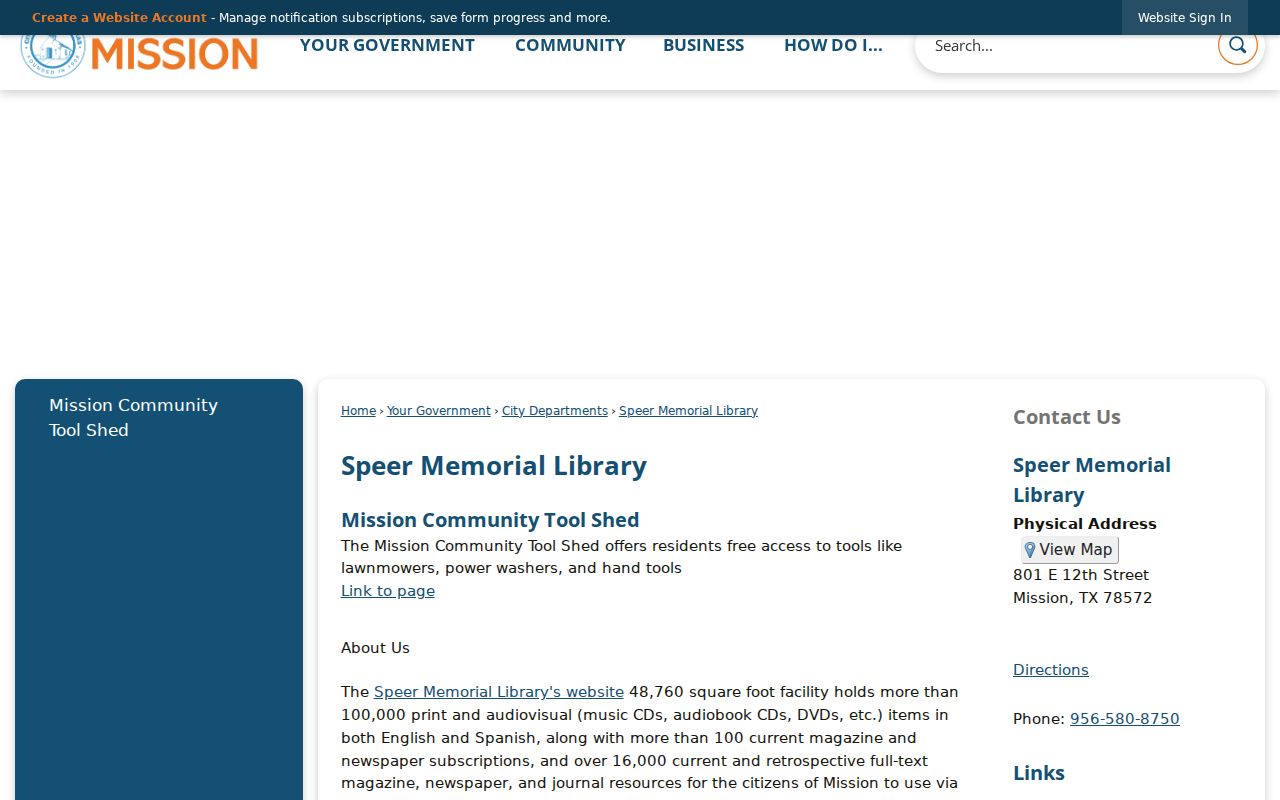
The library source is a starting point for a holdings question, not proof that any one directory year sits on a shelf.
Mission Newspaper Research Trails
Speer’s digital newspaper archive supplies the strongest verified local chronology when a directory volume cannot be confirmed. Its visible runs include Mission Times from 1901 through 1970, The Mission Times from 1923 through 1962, Progress Times from 1984 through 2016, Upper Valley Progress from 1979 through 1984, Valley Evening Monitor from 1945 through 1968, and a small 1963 Dallas Morning News set. Browse by title or decade, then search both the person’s name and the street.
OCR can distort Spanish surnames, accents, initials, and street abbreviations. Search surname-first and given-name forms, then try forms without accents or punctuation. A result image may connect a household to a marriage notice, obituary, school item, church event, club notice, business advertisement, or property notice. It is still necessary to distinguish a mention from a residential entry. A notice might name a person who attended an event without showing where that person lived.
Reading a Mission City Directory Entry
No verified Mission sample page was opened, so no local entry should be quoted or reconstructed. Once an original volume is found, copy its title, publisher, city, year, page number, street spelling, and abbreviation key before transcribing a name. The fields below are an inspection inventory, not a claim that every Mission volume printed every field. Each item must be verified in the image itself.
| Name line | Record the surname, initials, given name, and any spouse or relationship notation exactly as printed. |
|---|---|
| Occupation or business | Transcribe only when the entry supplies it, along with any employer or business text. |
| Residence | Capture the house number, street spelling, telephone number, and any residence notation. |
| Status or owner mark | Note a widow, ownership, or other symbol only when the volume defines it. |
| Abbreviation key | Photograph or copy the key so shorthand is not expanded by guesswork. |
An occupant line is not a deed. It may describe a resident, boarder, or other person connected with the address. For a current address-keyed record, use the Mission address directory route and compare the legal description and deed trail rather than turning a historic listing into an ownership claim.
Mission Directory Entry Terms
Directory shorthand changes by publisher and year. Read the key inside the same volume, especially where initials, residence marks, and relationship notes appear. The terms below describe how to approach a volume; they do not establish that Mission held a particular kind of book.
- Regular directory
- A name-first listing that may lead from a person to a street address.
- Criss-cross directory
- An address-first arrangement that can lead from a street address to an occupant, if the volume includes that section.
- Householder index
- A listing organized around the person recorded as the household reference, not necessarily every person at the address.
- Abbreviation key
- The publisher’s explanation of symbols and shortened words, which should be read before interpreting a line.
A name and an address are only the beginning. Keep the title page, date, page, and spelling with the transcription so another researcher can check the same line later.
Mission Records Source Timeline
A source timeline gives the household search a realistic order. It does not create a city-directory publication run where none has been verified. Hidalgo County’s older deed, court, marriage, probate, and tax records begin in 1852 in the TSLAC inventory. Mission’s documented newspaper trail begins later, and the released federal census ends at 1950 for public decennial schedules.
| Date or period | Verified record layer | How it helps a Mission search |
|---|---|---|
| 1852 onward | Hidalgo historical books and indexes at TSLAC | Supplies deed, court, marriage, probate, and tax context before many local printed sources. |
| 1901–1970 | Mission Times | Offers dated local notices and address clues. |
| 1933–1949 | Mission Sanborn map item | Shows building, street, and block context rather than a household list. |
| Through 1950 | Released federal census schedules | Provides a household snapshot near a directory year. |
| 1984–2016 | Progress Times | Continues the local newspaper bridge for later decades. |
Mission’s founding chronology has two source descriptions: the city uses 1908, while the Texas State Historical Association describes a project beginning in 1907 and incorporation in 1910. Keep that distinction when dating a neighborhood or an address reference. It is a reminder to retain the source date rather than forcing a single unsupported date onto a record.
Mission Directory Timing Tip
[INSIDER TIP] A one-year difference between a directory and a census is expected. Treat the two dates as a search window, not an automatic contradiction. A directory can be compiled or published at a different point in the year than its nominal date, while a census captures one enumeration period. Compare the street number, the neighborhood, and the related deed or map before deciding that the entries concern different households.
Mission’s seasonal movement and changing city, postal, and census geography add another reason to keep dates separate. A directory, tax roll, newspaper, and census can describe different populations at different times. The best note records what each source says, when it says it, and what remains unconfirmed.
Tracing Mission City Directory Households
Use overlapping records to test a household history. A directory can be published in a different year from the one printed on its cover, so a one-year difference from a census is not automatically a conflict. Pair a located directory entry with the nearest released census, then compare the address with a deed, parcel, map, and local newspaper image. Search names with initials, married names, Spanish or Anglicized forms, and accent variants before deciding that a household disappeared.
- Confirm the volume’s city, title, publisher, date, and page before recording a household.
- Transcribe the name, street spelling, number, and abbreviation key exactly as printed.
- Pair that year with the nearest public census schedule and its enumeration geography.
- Compare the lot, block, or legal description in a deed or map when the address may have changed.
- Use a dated newspaper image, obituary, or probate record as a further lead, then identify its custodian.
A person leaving a listing may have moved, died, changed a name, been omitted, or appeared under a different form. The evidence should decide which explanation fits. A later record that needs current confirmation can be checked through the Mission resident search route, while the historic entry remains a date-specific clue.
Mission Museum Research Appointments
Mission Historical Museum collections add family and cultural context when a directory or newspaper leaves a gap. The collection page identifies Albert Strahle Memorial material with newspapers, clippings, ephemera, and digital media; Arnaldo Ramirez and Falcon Records material with certificates, photographs, vinyl, and 8-track items; and Rome family material with photographs, written material, and Mission history. Research appointments are available through the museum, while its office and public exhibit hours are not the same.
View the Mission Historical Museum collections source before arranging a research appointment.
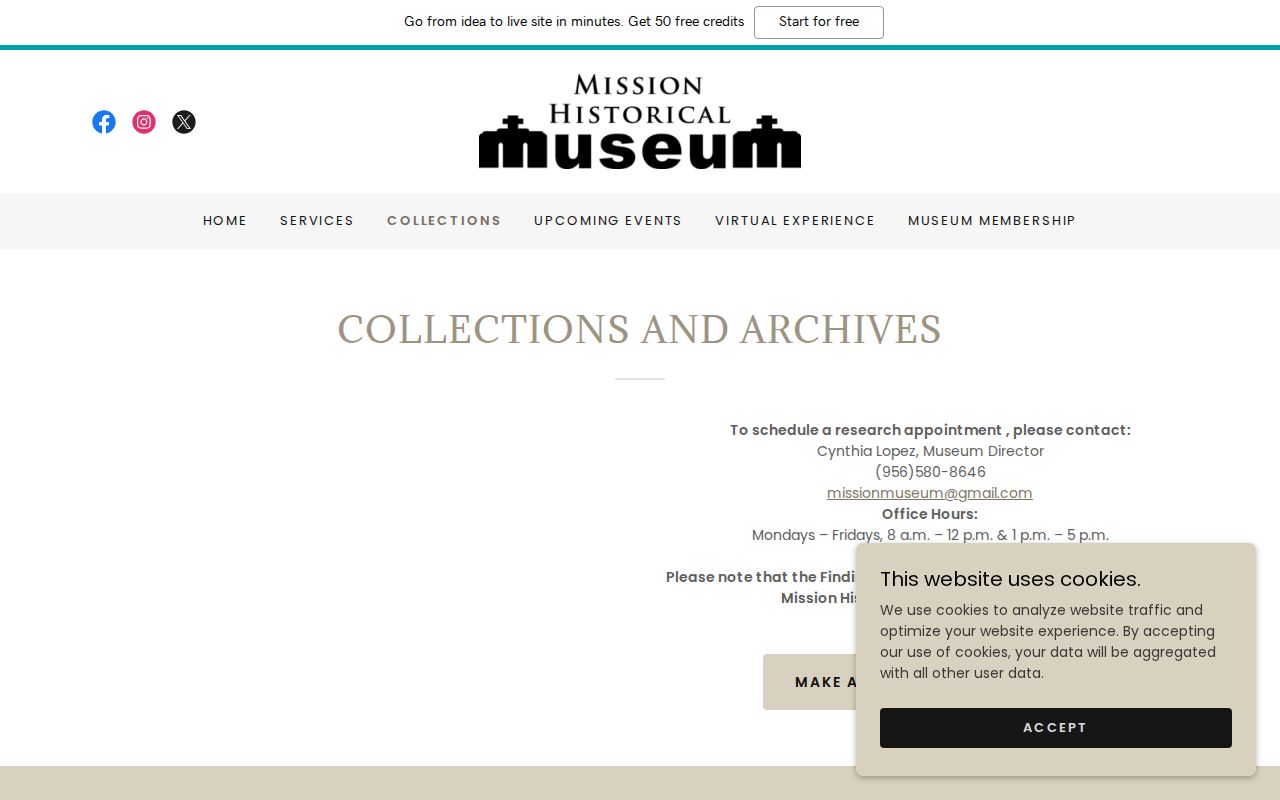
The museum can provide local context for a documented name or address, but its collections are not a substitute for a verified directory entry.
The Falcon Records story began in a Mission home in 1948 and is preserved through museum and Texas Historical Commission material. It is a useful example of how a local address can lead to cultural history. It does not identify a current household or establish who lived at any other address.
Mission Directory Search Tools
TSLAC and the Portal to Texas History are complementary research routes. TSLAC’s guide explains its on-site print and microform collection. The Portal has digitized city directories with guided search controls for words, exact phrases, excluded terms, dates, partners, collections, language, resource type, and several sort choices. Use both when a local shelf inquiry does not locate a confirmed Mission book.
Open the TSLAC city-directory research guide before arranging Austin research.
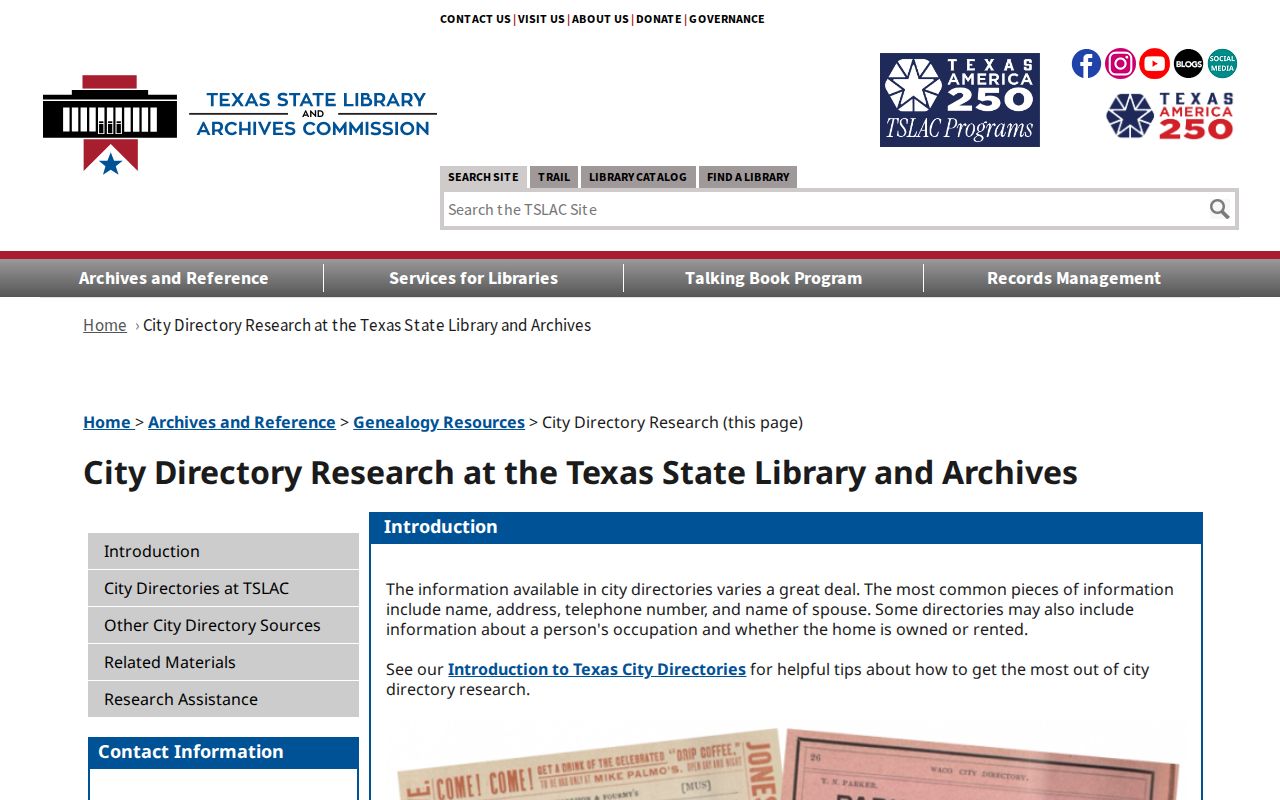
The guide explains the access route, while the requested city, title, and year still need confirmation with the holding institution.
Search the Portal to Texas History city-directory collection with the place name and a date range.
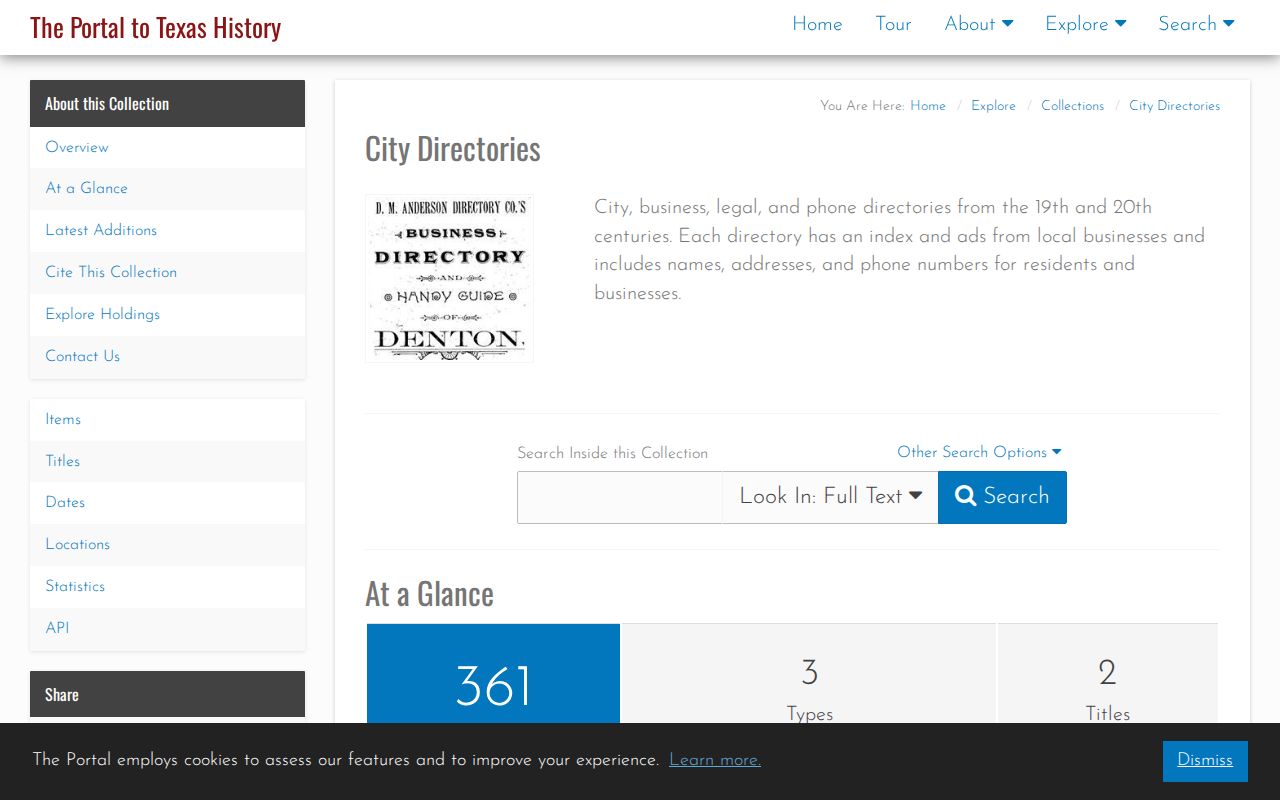
The digitized collection broadens a regional search, but an item must identify Mission before it can serve as Mission directory evidence.